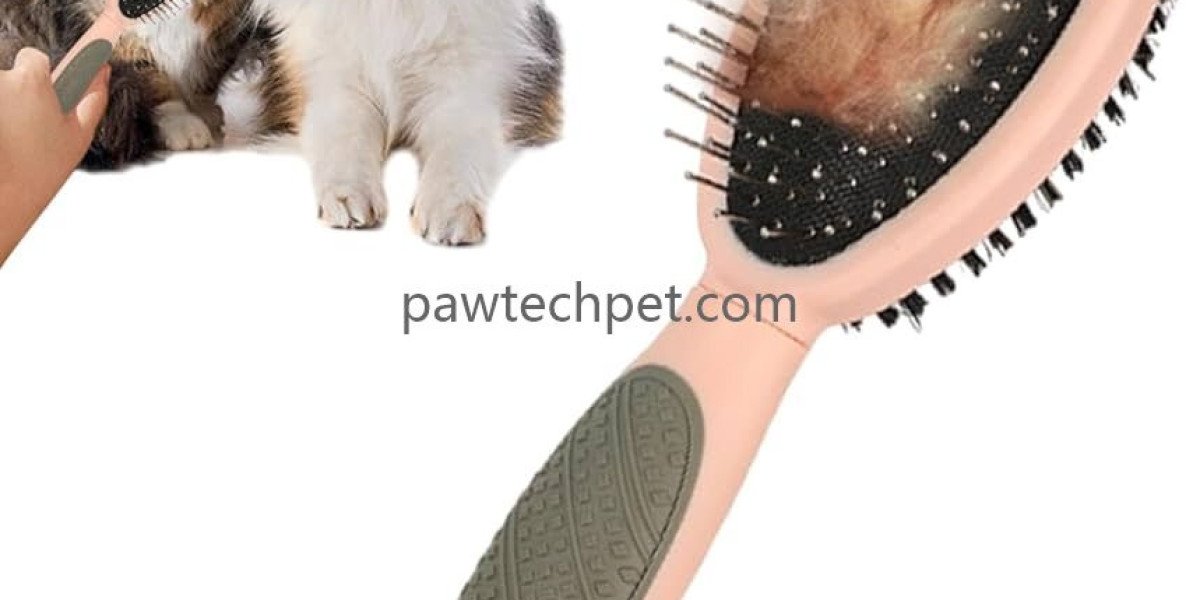

Regular grooming supports coat maintenance, cleanliness, and closer observation of an animal’s skin and hair condition. A well-designed Pet Brush should combine practical material selection, comfortable handling, suitable bristle structure, and easy maintenance to support different grooming routines. For manufacturers and B2B buyers, the most important considerations involve how the tool interacts with the coat, how it feels in the user’s hand, and how consistently it performs during repeated use.
Bristle design is one of the main factors influencing grooming results. Different coat types may require different levels of flexibility, spacing, length, and surface smoothness. Fine or closely spaced bristles may help collect loose hair, while wider spacing can be more suitable for separating longer or denser coats. Manufacturers need to match the bristle structure with the intended application rather than using one design for every animal.
The material used for bristles can affect both grooming performance and user comfort. Plastic, rubber, metal, and other engineered materials may be selected according to the desired flexibility, strength, and surface characteristics. Bristle tips should be designed with attention to smoothness and consistency so that the tool can pass through the coat without creating unnecessary discomfort when used correctly.
The connection between the bristles and the brush base is equally important. Bristles need to remain securely fixed during repeated movement and cleaning. Poor attachment may cause bristles to loosen or create uneven grooming behavior. Manufacturing processes should therefore control insertion depth, spacing, alignment, and connection strength to maintain a consistent finished product.
Handle design contributes to the user experience. Groomers may use a brush for extended periods, so the handle should provide a stable grip without creating excessive pressure on the hand or wrist. Surface texture, shape, weight distribution, and overall balance can influence control. A practical handle also allows users to change direction easily when working across different parts of an animal’s body.
The brush base requires suitable structural strength and flexibility. A rigid base may provide stability, while a more flexible structure may help the brush follow the natural shape of the coat. The best configuration depends on the intended grooming function. Manufacturers should evaluate the relationship between base construction, bristle movement, and pressure during use to create a balanced tool.
Cleaning convenience is another important design requirement. Hair, dust, and skin particles can accumulate between bristles during grooming. If these residues are difficult to remove, the tool may become less hygienic over time. A practical design should allow users to clear collected hair and wash relevant surfaces without damaging the bristles or weakening the brush structure.
Material durability also affects product value. Grooming tools are commonly exposed to repeated handling, moisture, cleaning agents, and occasional impact. Housing materials should maintain their shape and surface quality under normal use. Bristles and connection points should also resist premature wear. Manufacturers can improve durability by selecting materials according to the actual environment in which the tool will be used.
Quality control is necessary to maintain consistency across production batches. Inspection may include bristle spacing, tip smoothness, handle dimensions, base alignment, attachment strength, surface finish, and overall appearance. Functional checks can also help identify uneven movement or loose components before products are packaged.
For professional grooming businesses, reliability and comfort are particularly important because tools may be used frequently throughout the day. Distributors and retailers may also require consistent appearance, packaging, labeling, and product documentation. Manufacturers that maintain organized production procedures can respond more effectively to these requirements and support stable B2B cooperation.
A suitable Pet Brush is therefore the result of coordinated design rather than a simple combination of bristles and a handle. Bristle material, base structure, ergonomic design, cleaning access, durability, and manufacturing inspection all influence the practical value of the finished tool. Companies developing broader pet-care product portfolios can also explore related offerings at https://www.pawtechpet.com/product/pet-clothing/ when planning complementary sourcing and product development.






